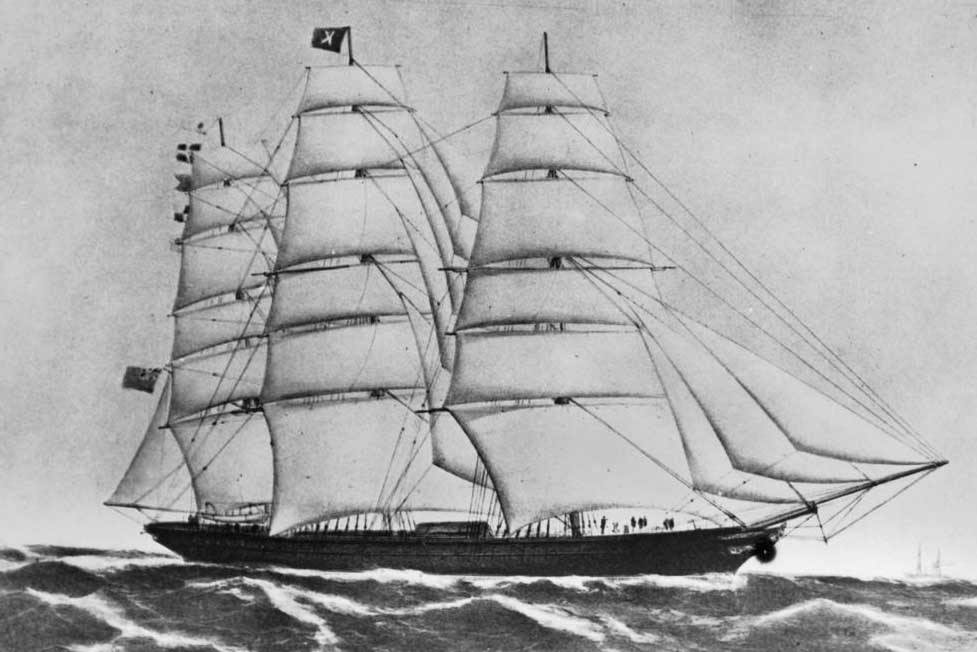
Chasing the Absconder

In the spring of 1839, Sydney was a settlement intoxicated by speculative commerce, land booms, and an influx of British capital. The waterfront at Sydney Cove hummed with timber wharves, cooperages, and the hammering of shipwrights. Among those seeking a foothold in this turbulent colonial economy was twenty-year-old Thomas Adam, an apprentice-trained carpenter recently arrived from Scotland. He had barely accustomed himself to the dusty clamour of the town when he was swept into one of the most audacious scandals in early colonial history.
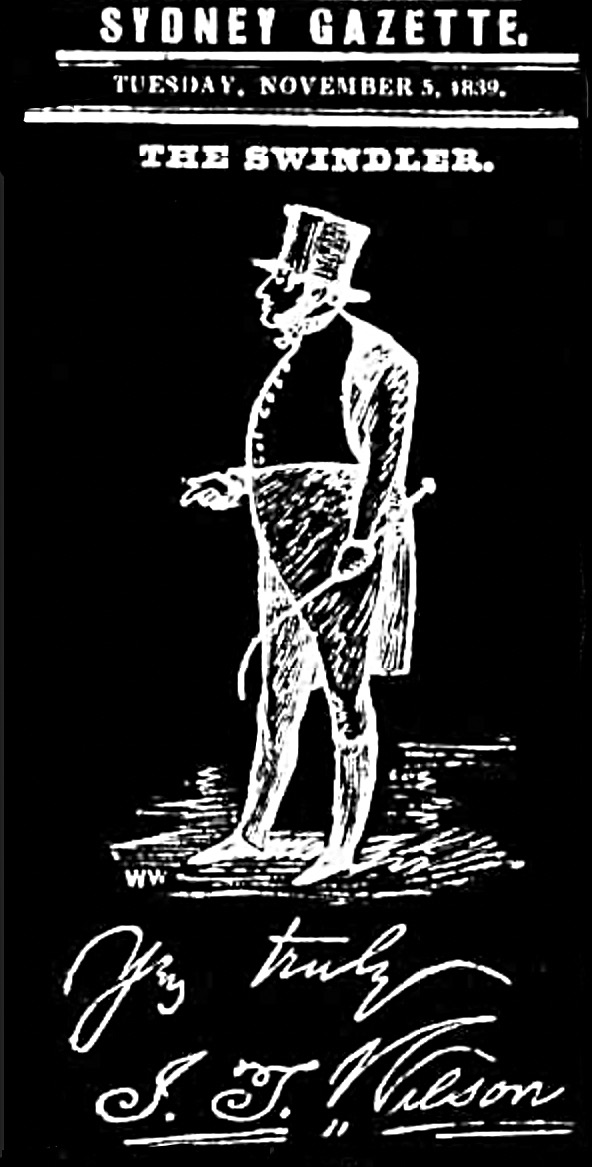
Contemporary sketch portrait of John Thomas Wilson
The flamboyant colonial charlatan John Thomas Wilson, who defrauded Sydney merchants and banks before fleeing abroad.

Sydney society was transfixed by the rise of John Thomas Wilson. A charismatic ironmonger on George Street, Wilson had expanded rapidly into shipping syndicates, auction houses, and theatrical management. He projected an air of boundless civic prosperity, cultivating friendships with magistrates and leading merchants. Yet behind this veneer of commercial respectability lay an intricate web of forged bills of exchange, kited paper, and fabricated credit balances. By late September 1839, the financial facade began to buckle under the weight of pressing obligations.

Rather than face insolvency and penal servitude, Wilson engineered an astonishing escape. In total secrecy, he chartered the schooner Nereus, slipping provisions, casks of champagne, fine plate, and kegs filled with an estimated £20,000 to £30,000 in sovereigns aboard under cover of darkness. In late October, accompanied by his mistress and several confederates, Wilson slipped quietly out past South Head and into the vast Pacific. When his creditors and the directors of the Bank of Australasia realized the scale of the default on the following morning, the colony erupted into fury.

Determined to retrieve their plunder and bring the fugitive to justice, a syndicate of duped merchants and bailiffs acted swiftly. The auctioneer brothers Abraham and Samuel Lyons offered their fast trading brig, the Louisa, a stout vessel of more than one hundred feet, to lead an armed trans-Tasman pursuit. With speed essential, experienced mariners and skilled tradesmen were engaged on the waterfront at once. Thomas Adam was signed on as ship’s carpenter, charged with the constant, vital duty of maintaining the vessel’s hull, hatches, and timber works under hard sail.
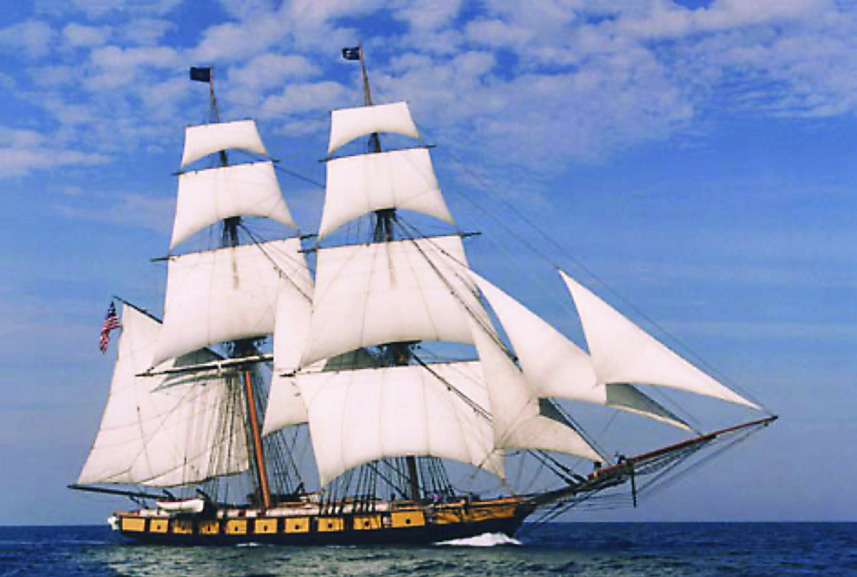
Engraving of the colonial brig Louisa under sail
The colonial trading brig ‘Louisa’, on which young Thomas Adam shipped as carpenter in 1839.

The Louisa cleared Sydney Heads under a press of canvas, steering eastward across the Tasman Sea toward New Zealand. The crossing was notoriously punishing. Spring gales tossed the brig through heavy swells, putting severe strain on her spars and timbers. Below deck and along the slippery weather decks, Thomas was kept busy caulking opened seams, tending the bilge pumps, and securing cargo against the relentless pounding of the sea. It was a baptism of fire for the young Scotsman, testing both his maritime carpentry and his physical fortitude.

The pursuers staked their hopes on intercepting the Nereus at Russell (Kororareka) in the Bay of Islands, then an unruly whaling rendezvous beyond formal British sovereignty and a customary haven for Pacific shipping. But fortune favoured the swindler. When the Louisa finally dropped anchor amidst the whalers and coastal traders of the Bay, the search party learned to their dismay that Wilson had arrived, reprovisioned, and weighed anchor just days ahead of them. The Nereus was already deep into the open Pacific, bound for the Straits of Magellan and the South American port of Valparaiso, far beyond the reach of colonial law.

The Louisa could chase no further. With supplies running short and the trail gone cold, the pursuit was abandoned, and the brig turned back toward New South Wales. By the time Thomas Adam stepped ashore at Sydney Cove in the autumn of 1840, he was no longer an untried immigrant boy. The voyage had endowed him with formidable nautical skill, an intimate understanding of maritime timber, and an unforgettable lesson in the volatile frailties of colonial capitalism. Setting his tools to work on terra firma, Thomas turned his back on speculative flurries to lay the foundations of an enduring, honest building enterprise on colonial soil.
Wreck at Curdies Inlet

In the opening months of 1877, twenty-five-year-old William Whitfield took command of the Young Australian, a 130-ton three-masted wooden schooner. Built on the shores of Jervis Bay in 1864 and registered out of Brisbane under the ownership of Andrew Muir, she was a seasoned coaster, though by no means an easy charge. On 1 May 1877, deep in the water with 5,452 bags of sugar and 180 casks of rum from the Yengarie Sugar Refinery, she weighed anchor from Maryborough, bound for Port Adelaide.

Photograph of a 19th century three-masted topsail schooner
A colonial three-masted topsail schooner similar in rig to the ‘Young Australian’.

William’s crew reflected the typical polyglot waterfront of colonial Australia: his mate, James Ryans, was a twenty-eight-year-old Scot; his able seamen included Peter Frazer, another Scotsman, and two German mariners, one of whom was thirty-eight-year-old Prussian Frederic Mittay. From the outset, the vessel proved deficient. Caught in a vicious south-easterly blow shortly after clearing Moreton Bay, the schooner sustained severe damage aloft. William was forced to bring her into Port Jackson in distress, where he paid off his Belfast-born cook, Francis Wilson, and shipped William Eltham in his stead.

Having effected makeshift repairs on limited credit, William cleared Sydney Heads on 17 May, running south into the teeth of an impending Southern Ocean gale. By the time the vessel rounded Cape Otway and approached Cape Nelson, near the South Australian border, conditions were appalling. In 1877, the towering stone beacon at Cape Nelson was still two years away from being surveyed; on that pitch-black night, with blinding squalls obliterating all visibility, the crew had no landmark to steer by. Failing to make shelter in Portland, the vessel was struck by an immense sea that nearly drove her down sternmost. Her foremast was sprung, her rigging crippled, and William was forced to turn east and run before the wind, desperately cutting away fouled lines to prevent the spars from beating through the hull.

Compounding the peril, William possessed no chronometer on board. He was compelled to navigate by dead reckoning alone—a perilous venture on a shore where current and leeway could fling a vessel miles off course. More than seven hundred vessels lie broken along the Shipwreck Coast between Moonlight Head and Port Fairy; Matthew Flinders had soberly recorded decades earlier that he had never surveyed ‘a more fearful section of coastline’.

Contemporary engraving from The Australian Sketcher showing the wreck of the Young Australian on the rocks
The wreck of the three-masted schooner ‘Young Australian’ at Curdies Inlet, Victoria, 28 May 1877. From The Australian Sketcher, July 1877.

By 27 May, driven relentlessly toward the cliffs near Curdies Inlet, William faced imminent destruction. In a display of extraordinary nerve, the young captain clambered high into the swaying, damaged rigging. From his precarious perch aloft, shouting orders down through the gale, he conned the helmsman through an intricate, boiling channel in the outer reef—the very reef that had claimed James Baines’s celebrated clipper Schomberg in 1855.

Though he threaded the reef, the schooner was trapped in the breakers. Grounding two hundred yards off the mouth of the inlet, the ship shuddered violently under the rollers. In the frantic attempt to secure a lifeline to the shore, helmsman William Eltham was swept away by the undertow and drowned; his body was never recovered. Guided by six or seven local settlers who had hurried to the beach, the remaining crew hauled themselves through the surf along a line. True to the traditions of the merchant service, William Whitfield was the last man to abandon the ship, stepping off only when her hold was flooded and her hull irrevocably settled into the sands.

William camped beside the wreck until insurance assessors arrived, overseeing the salvage and subsequent auction by Greig & Murray in Melbourne: 138 hogsheads and 42 casks of Queensland rum, along with 5,600 mats of saturated sugar, against an insured hull value of £2,000. He then travelled to Melbourne aboard the coastal steamer Otway to face the Melbourne Steam Navigation Board at the Custom House.

Public opinion was initially firmly in his favour. The Warrnambool Standard remarked admiringly that ‘in directing that the vessel should be steered for a narrow opening in the reef, the captain, who directed the steering from the rigging, showed coolness and judgement, otherwise his own life and those of his men would doubtless have been sacrificed.’ Yet the Marine Board took a harder line, charging Whitfield with a wrongful act in proceeding to sea knowing the vessel possessed defective gear and insufficient equipment.

Facing the ruin of his career and the suspension of his master’s certificate, William pleaded penury: he had telegraphed Andrew Muir in Brisbane repeatedly for funds to refit the vessel properly, but had received nothing. On 23 June 1877, his solicitor, Mr Stewart, launched a devastating legal assault on the proceedings. Stewart demonstrated that because the English Merchant Shipping Act amendments championed by Samuel Plimsoll had not yet been enacted into Victorian colonial statute, the Marine Board possessed no jurisdiction to hold a master criminally liable for unseaworthy conditions imposed upon him by distant, parsimonious owners.

The bench had no answer. Within fifteen minutes, the court conceded the point of law, exonerated Captain Whitfield, and returned his certificate. The outcome triggered blistering editorials in The Age and the Port Phillip Herald, condemning colonial legislative inertia that permitted ‘coffin ships’ to sail with impunity. For William Whitfield, exoneration was an essential professional vindication, yet the memory of Curdies Inlet—and the drowned helmsman he could not save—would remain an indelible shadow across his seafaring career.

Footdee to Port Phillip

When the siren call of the Victorian goldfields reverberated through the shipyards of Great Britain in the early 1850s, it prompted thousands of men to abandon their trades for the picks and cradles of Mount Alexander and Ballarat. Yet for experienced seamen raised on the temperamental waters of the North Sea, the greatest fortunes were often perceived not in the gravel of the creek beds, but upon the coastal sea lanes supplying a colony ravenous for goods.

Brothers Findlay and William Duthie were master mariners of the highest pedigree, intimately bound to the celebrated shipbuilding yards of Footdee—affectionately known as ‘Fittie’—at the mouth of Aberdeen Harbour. Imbued with the meticulous craft of their kinsmen, who were pioneering the sleek lines of the Aberdeen clipper, the brothers resolved to mount their own independent venture to the antipodes. In the spring of 1853, they secured the two-masted wooden clipper schooner Gem.

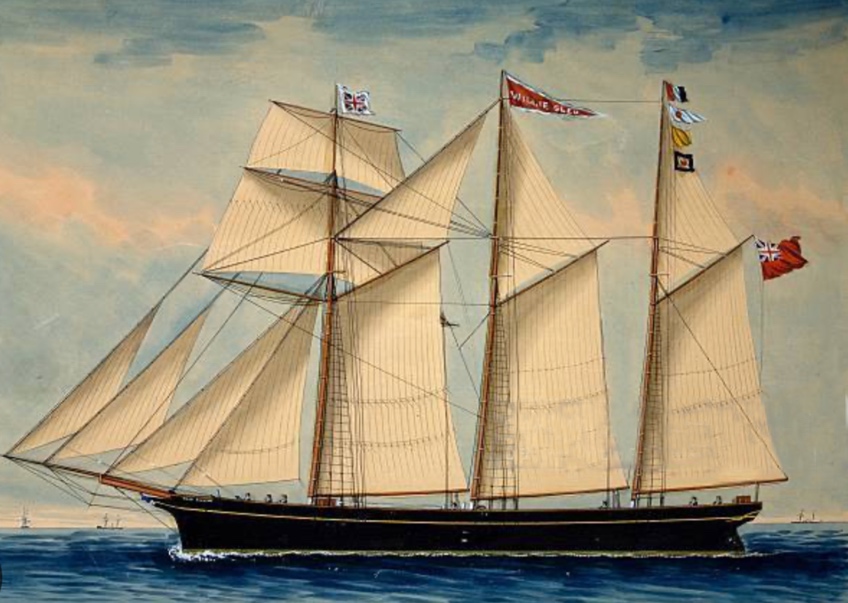
Historic painting of the two-masted schooner Gem at sea
The Aberdeen clipper schooner ‘Gem’, sailed to Melbourne by Findlay and William Duthie in 1853.

Registered at barely one hundred tons register, the Gem was a compact yet thoroughly capable craft. Built with an iron clinch, copper fastenings, and adorned with a modest female scroll figurehead, she represented the apex of small-scale commercial naval architecture. Findlay took command as master, while his younger brother William signed on as first mate. Leaving his wife, Jane Duthie (née Brown), and their young children temporarily sheltered in the bustling maritime community of Sunderland, Findlay turned the schooner’s bows toward the open sea in May 1853.

The Gem’s hold was crammed with speculative mining gear, ironmongery, apparel, and durable provisions destined for the Melbourne markets. A voyage of over 13,000 nautical miles in so small a vessel was a severe test of seamanship. Driving down through the Atlantic doldrums and around the Cape of Good Hope, the schooner plunged directly into the howling westerly gales of the Roaring Forties. Running before monstrous southern ocean swells that regularly dwarfed her low freeboard, the compact schooner demonstrated remarkable buoyancy and grace, logging over one hundred days at sea before picking up the pilot off Port Phillip Heads in August 1853.

Upon dropping anchor in Hobson’s Bay, the Duthies encountered a surreal spectacle: a vast armada of square-rigged ships, barques, and clippers swinging idly at their moorings. Hundreds of vessels lay virtually abandoned by their crews, who had slipped over the side under the cover of night to bolt for the diggings. For men less disciplined, the temptation to join the rush would have been irresistible.

Historic portrait of Captain William Duthie
Captain William Duthie, master mariner and co-owner of the schooner ‘Gem’.

The Duthie brothers, however, possessed the sober commercial acumen of their Scottish heritage. Discharging their cargo onto the crowded wharves of the Yarra at exorbitant gold-rush prices, they immediately perceived that freight rates in the intercolonial trade were skyrocketing. Melbourne was crying out for building timber from Van Diemen’s Land, coal from Newcastle, and fresh provisions from every port within reach.

Rather than permitting the Gem to rot at anchor, the brothers put her straight to work in the coastal trade. Navigating the treacherous tides of Bass Strait and the volatile eastern seaboard, they built a reliable and highly profitable cabotage enterprise. In due course, William Duthie presented himself before the colonial marine board, secured his master’s certificate of competency, and assumed independent command of the schooner, while Findlay managed their expanding commercial interests from the shore.

By 1857, the foundation was sufficiently secure for Findlay to summon his family from the northeast of England. Jane and the children made the long passage south, reuniting the household in Melbourne. While many who had chased the alluvial diggings departed the colony broke and disillusioned, the Duthies leveraged their North Sea seafaring heritage into a durable maritime dynasty that would serve colonial Victoria for generations.

Brimstone and Bowstrings

In the high summer of 1837, eighteen-year-old cabinetmaker Thomas Adam bade farewell to the weaving and manufacturing town of Kilmarnock in Ayrshire. He was one of the hand-picked recruits secured by the Presbyterian firebrand, the Reverend Dr John Dunmore Lang, whose vigorous government bounty scheme sought to leaven colonial New South Wales with the ‘cream of the artisan classes’—men of moral rectitude, steady hand, and strict sobriety.

Thomas brought credentials that spoke to generations of civic and spiritual service. His father, Thomas Adam Senior, served as Session Clerk, and his character was duly attested by the Reverend David Wilson. Master cabinetmakers Alexander Alexander and William McCredie provided glowing testimonials of his craft. Into his sea chest went the indispensable tools of his trade, a selection of books, James Maclehose’s newly printed Picture of Sydney, and his prized fiddle.

On 13 August 1837, Thomas joined more than two hundred fellow Scottish emigrants and thirteen German missionaries bound for Moreton Bay on the quayside at Greenock, boarding the 380-ton barque Minerva under the command of Captain Thomas Furlong. As the Firth of Clyde faded in the ship’s wake, the young cabinetmaker’s fiddle became a vital antidote to homesickness. During the opening weeks of the voyage, whenever the weather permitted, passengers gathered on the foredeck in the twilight to dance strathspeys and reels beneath the billowing canvas.

Yet life between decks was severe. In steerage, strict regulations prohibited open candles and smoking, plunging the cramped berths into utter darkness from nightfall until morning. Ventilation was poor, and the tropics brought oppressive heat. By November, as the Minerva traversed the lonely expanses of the southern oceans, foul water casks turned the hold into a breeding ground for typhus fever.

The voyage soon descended into a waking nightmare of delirium and dysentery. The tragedy deepened when a young married passenger, Donald McPhail, was swept overboard in heavy seas and lost to Davy Jones’ locker. Below decks, the ship’s surgeon struggled in vain; fourteen souls perished before Australian land was sighted.

New South Wales Government Gazette notice for the Minerva quarantine
Official Government Gazette notice placing the barque Minerva in quarantine, 31 January 1838.

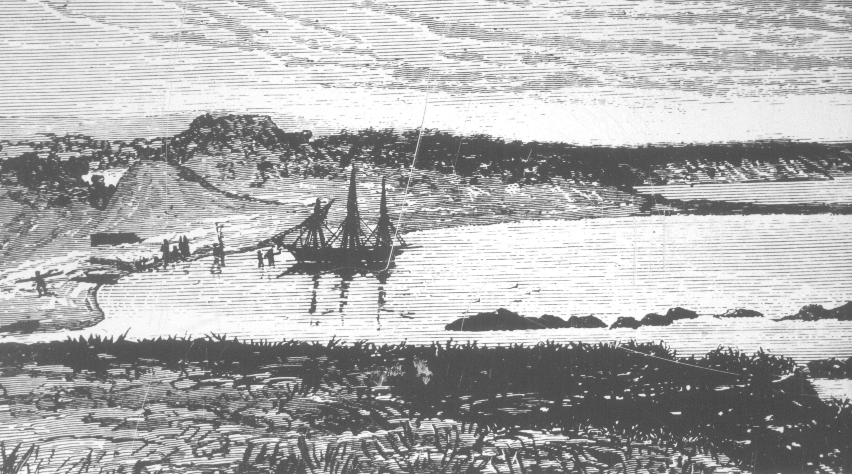
When the Minerva finally hove to off Sydney Heads on 23 January 1838, there was to be no triumphant landfall. The boarding pilot took one look at the stricken manifest—thirty-four passengers lay dangerously ill with fever—and ordered the vessel straight into Spring Cove at North Head. The colonial authorities had no intention of allowing ship-fever to take hold in the streets of Sydney.

Historic illustration of Spring Cove Quarantine Station at North Head
The Quarantine Station at Spring Cove, North Head, where the barque Minerva was detained in 1838.

At the Spring Cove Quarantine Station, a hasty tent hospital was pitched along the sandy shore. The most desperate sufferers were separated and rowed up the harbour to the colonial hospital in Lower George Street under armed escort, while the remaining emigrants were subjected to rigorous isolation. Despite medical care, another eight passengers succumbed in the quarantine tents and were buried in unmarked graves in the sandy bushland above the cove.

Thomas Adam was among the fortunate survivors whose youth and constitution spared him from the worst of the pestilence. His introduction to the colony, however, consisted of forty-four grueling days in quarantine. Under the watchful eyes of colonial guards, the passengers scrubbed their possessions in boiling seawater and endured the stifling fumes of burning brimstone (sulphur) to fumigate their woollens and linens.

It was not until 6 March 1838 that the clean bill of health was granted. Disembarking at long last onto the bustling wharves of Sydney, Thomas Adam shouldered his tool chest, clutched his undamaged fiddle, and stepped out into the colony—an artisan tempered by water, grief, and fire.

The Barepot Mariner

On 18 April 1851, in the humble settlement of Barepot—an industrial village nestled beside the Seaton Iron Works on the banks of Cumberland’s River Derwent—Mary Whitfield, née Beeby, gave birth to her son William. Her husband, John Whitfield, registered the birth at Cockermouth on 6 May, recording his occupation simply as ‘labourer’. Two months later, on 22 June, the infant was carried to the ancient parish church of Saint Michael in Workington for baptism. With ten children beneath their roof, John and Mary Whitfield endured a crowded, hardscrabble existence, yet several of their brood attained a commendable standard of literacy. For young William, that early schooling would later prove indispensable when navigating the responsibilities of a master mariner.

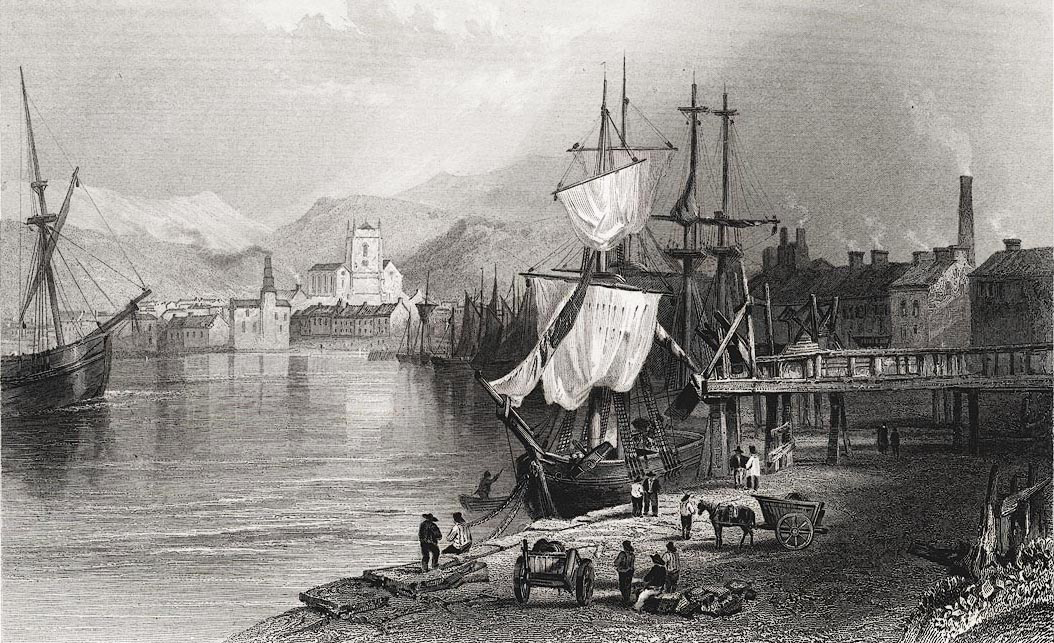
1840s engraving of Workington Harbour by W. H. Bartlett
Workington Harbour in the 1840s showing the docks, coal loader, and St Michael’s Church. Engraving by W. H. Bartlett.

Domestic security proved fleeting. In January 1854, when William was not quite three years old, his mother died. The loss reverberated through the boy’s entire life. Decades later, a medical clerk recording his physical description noted a poignant emblem indelibly pricked into the skin of his forearm: a tomb sheltered by a drooping willow, bearing the inscription ‘In Memory of my Mother’ (Sculcoates Asylum Records, Case History No. 2928, Hull Archives). For a motherless toddler growing up in Barepot, grief was accompanied by acute privation as John Whitfield struggled to raise the surviving children alone.

Misfortune fell upon the family in cruel succession. Within two years of Mary’s passing, two of William’s sisters drowned in separate tragedies. Then, in 1861, John Whitfield suffered a fatal industrial accident at the iron works. At just nine years old, William was an orphan, cast upon the kindness and resources of his eldest brother, James Whitfield.

James had recently returned to Workington after trying his luck with considerable success on the Victorian goldfields during the 1850s. Enterprising and astute, James stepped forward as the family’s anchor, providing financial support and guidance to his younger siblings. His colourful accounts of life at the antipodes must have cast a long shadow over young William’s imagination. Yet survival in Workington demanded immediate labour. The Seaton Iron Works had closed its furnaces when William was eight, driving local workers downriver toward the expanding harbour, scarcely a mile from Barepot. Through the maritime connections of James’s father-in-law, a local mariner named James Brown, young William likely secured a berth as an ordinary seaman in the brisk coastal coal and iron trade.

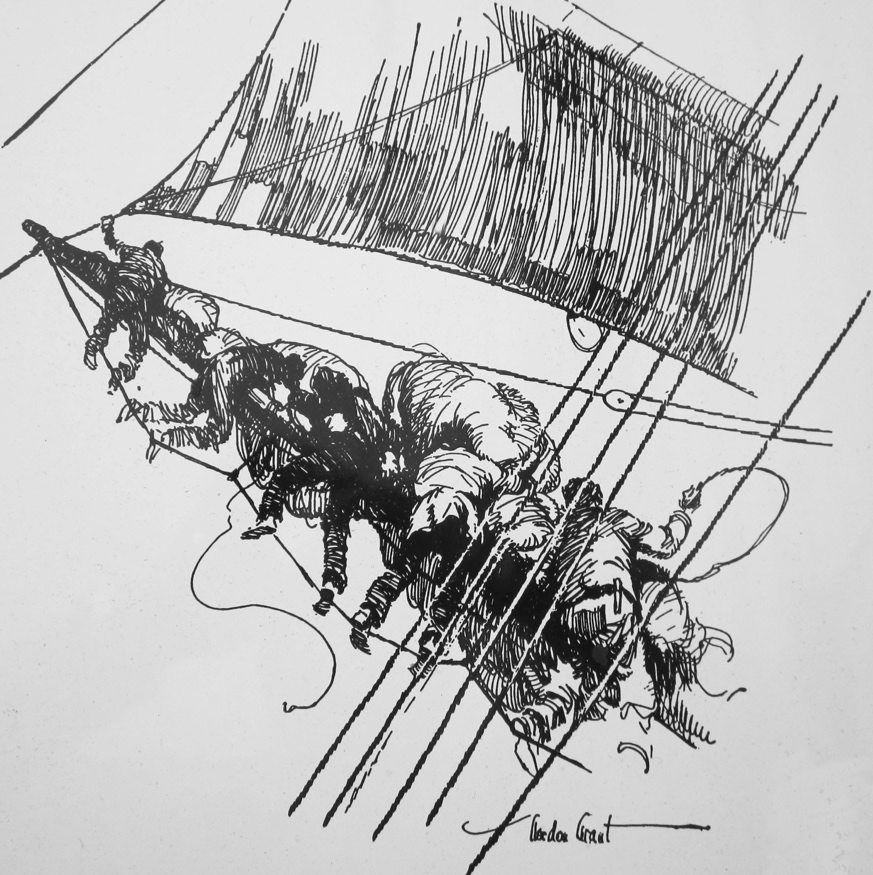
Historic sketch of sailors working aloft on the yardarms
Manning the sails on the yardarms in heavy seas—perilous daily work for young ordinary seamen.

Victorian merchant seafaring was a profession shorn of romance. While landsmen marveled at the symmetry and grace of tall ships under full canvas, life before the mast was squalid, precarious, and exhausting. Quarters in the forecastle were cramped and perpetually damp; weary hands snatched brief watches below, sleeping fully clothed in wet oilskins upon sodden straw mattresses. On deck, youths were driven aloft in biting gales to fist canvas on icy yardarms, ever mindful of shifting coal cargoes, dismasting, rogue swells, and intemperate skippers. The rations were notoriously foul—weevily hardtack and brined salt beef—and wages offered scant reward for constant physical jeopardy.

Yet for a boy with few prospects in industrial Cumberland, the sea was an avenue to the wider world. Following his brother’s footsteps, William eventually engaged on an ocean-going vessel bound for the Australian colonies. When his nephew Joseph John Whitfield provided evidence following William’s death in 1894, he recalled that his uncle had lived in Australia for ’28 years’—placing his arrival on colonial shores around 1866. Just fifteen years old, the Barepot orphan stepped ashore beneath southern skies, embarking upon a long and turbulent career on Australian waters.

Before the Mast

Our sailor ancestors spent many years before the mast but two escaped the cramped forecastle quarters of the common sailors, weathered the storms on many a sea and became master mariners. Findlay Duthie learnt the ropes from 16 years of age in Aberdeen. He became a Mate, sailed with his Master Mariner brother in their ship ‘Gem’ in the foreign trade from 1851, mainly to Spain and Mediterranean ports then to Melbourne in 1853.  Findlay commanded ‘Gem’ and other ships in the coastal trade, avoiding Davy Jones’ locker with only one minor incident to discredit him, unlike William Whitfield who on occasions was reprimanded by the Marine Board. The first occasion, when he was 26, brought him no penalty and in fact his competence and bravery saved all but one of his crew when ‘Young Australia’ was wrecked near Port Campbell, Victoria in 1877. Working mainly on the Queensland Coast as a Master Mariner, William knew the treacherous inner passage well. He was a pilot at Port Curtis and the Torres Straits and despite liking his grog, expertly sailed tiny pearling luggers to Thursday Island for the pearling industry. But grounding a steamship at Townsville took the wind out of his sails and finished William’s maritime career. John Montgomery, from Londonderry in Ireland then Irvine in Ayrshire, Scotland, went to sea as a young boy and became a signaller on ships which took him to Australia. He liked what he saw and eventually brought his family to Newcastle from Scotland in 1886, and while never a land lubber, forsook the sea and became a railway signaller.

Adventures

Thomas Adam had many an adventure but most noteworthy was his 1839 pursuit, on board the brig ‘Louisa’, of the infamous swindler John Thomas Wilson, who absconded leaving debts of between £40000 and £50000, owed to Sydney merchants.  The journey took Thomas around the world, just a year after he had migrated from Ayrshire, Scotland.  The following year, Thomas encountered the even more infamous Jewboy Gang who caused terror in the Lake Macquarie district where they were eventually captured in 1841. The seven bushrangers were tried, convicted and hung at Darlinghurst Gaol.

Soldiers of the Queen

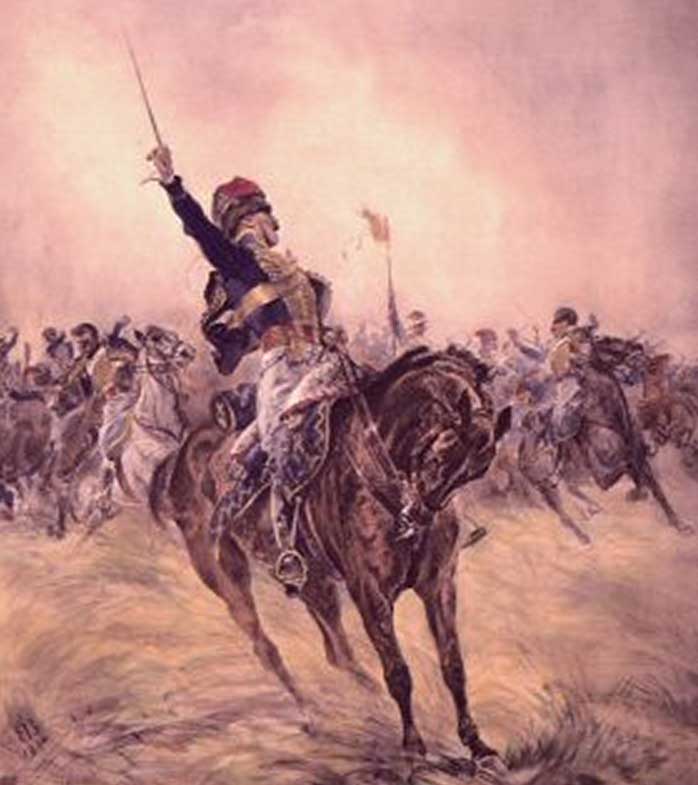
10th Hussars at Waterloo

Our ancestors have played their part in every major British conflict for over two centuries. Loyalty to Queen and Empire throughout Queen Victoria’s 63 year reign is evident, particularly in several rural families with northern Irish roots. Predating that period, John Fowler was a professional soldier enlisting in the 10th Royal Hussars, the ‘Prince of Wales Own’ at Leeds, Yorkshire in 1802. He rose to Sergeant Major, serving in England, Ireland and on the Continent through the war with France, specifically in the Peninsula Wars and at the Battle of Waterloo under the Duke of Wellington. Having served under two Hanoverian kings, George 111 and the Prince Regent, later George 1v, he retired in 1826 but trained reservists at Harwood. Edmund Childs also served in the British Army in the same period, enlisting in Ireland in 1806, fighting in the major battles of the Peninsula Wars between 1808 and 1814 as well as at New Orleans and was discharged in 1821. He then married and reared his family in Newtownards, County Down. Archibald McCallum, brother of John McCallum in Mittagong, was also a professional soldier. After enlisting in the 42nd Royal Highlanders Regiment at Glasgow about 1831 he served in Ireland, Corfu, Malta, Bermuda, Scotland, England and in the Crimean War. As a sergeant, he was a drill master at Alyth before retiring in 1861.

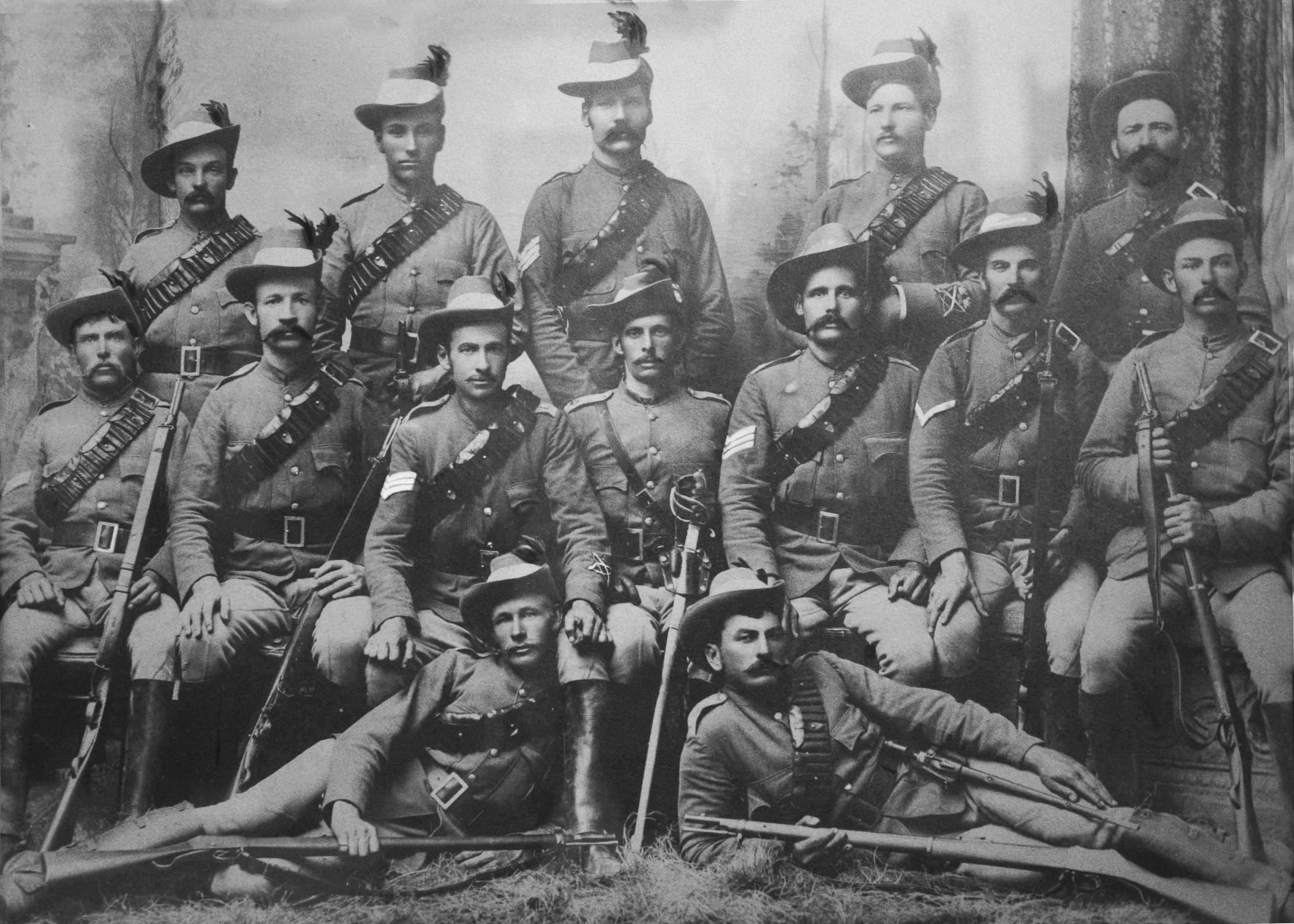
Adam & David McAllister, Archie Campbell, J F Thomas & others, Hutton Shield winners Randwick 1893

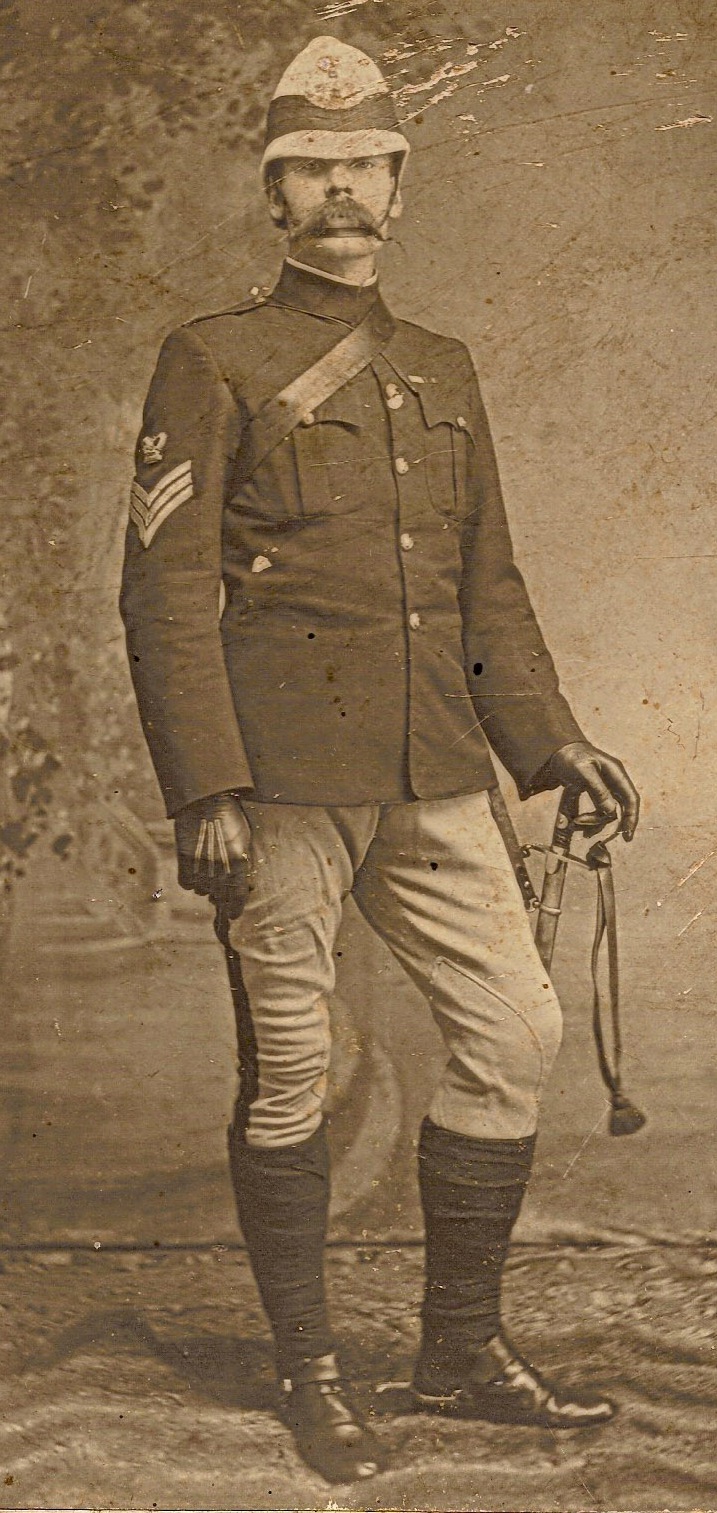
Our first Australian soldier was Edward Scrivener, a member of the NSW Volunteer Corps (Artillery) from 1855. Hugh Gilmore Campbell, his brother Archibald Campbell and brother-in-law Adam McAllister enlisted in Harry Chauvel’s Upper Clarence Light Horse at Tabulum in 1885. The Campbell and McAllister boys then trained under J F Thomas (later solicitor for Breaker Morant) at Tenterfield and competed in military events with distinction. Adam McAllister and Archibald Campbell travelled to England for Queen Victoria’s Diamond Jubilee celebrations in 1898 and were her personal bodyguards in the procession through London, Adam being one of 10 from NSW presented to Queen Victoria at Windsor Castle. Adam and his brother David McAllister served in the Boer War and both families were represented in the 1st AIF serving at Gallipoli, in the desert war and on the battlefields of France. By then a professional soldier and promoted to Major, Adam McAllister died from wounds in Palestine in 1917. His nephew David Henry McAllister died in France in 1917.

Adam McAllister 1890

Of the 17 Campbells and McAllisters who enlisted in the First World War, seven were killed and a further six young men were wounded and maimed. Hugh Campbell’s son Warren McAllister Campbell died of disease at Gallipoli,  his cousins Archibald McPherson and  Henry Campbell Harper  died in France as did his nephews Thomas Campbell and Hampton Willis. Other family members who enlisted in World War One were Oswald Adam  and  Alex Montgomery from Newcastle, Harold Childs who served in the Light Horse in Palestine and brothers  Hector Archibald McCallum and Lindsay Stuart McCallum from Mittagong as well as their cousin John Archibald McCallum. The McCallum boys all served on the Western Front. Hector and Lindsay were killed in action. The next generation served in volunteer militias and in World War Two in great numbers, some also serving in Korea and Vietnam. One who served with great distinction was Mary Ann Adams’  great nephew Major Rex Blow, ‘one of the Australian Army’s most daring and colourful heroes of World War 11’. William Bruce McAllister was a prisoner of war in Thailand for three and a half years.

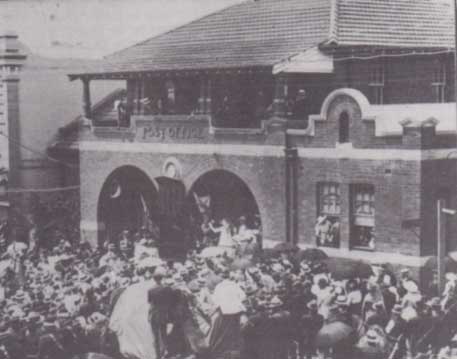
Ernest Blow takes the flag, Nowra Post Office 1915

In 1915, Mary Ann Adams’ cousin Ernest Blow of Kiama led the famous Waratah recruitment march from Nowra to Sydney. Like the Campbells and McAllisters, Ernest was a Light Horse soldier. He joined the Illawarra Light Horse in the 1890s, the Berry Half Squadron of the NSW Lancers in 1897, trained in England and from there his regiment went to the Boer War, the first overseas troops to reach Cape Town. Ernest was promoted to Captain. Back on the South Coast he was area officer in charge of cadets between Milton and Helensburgh. In 1915 he was in charge of recruitment  and as a result led the Waratah March.

Pioneer Farmers

John Blow
William Adams

Most of our ancestors were city or rural urban dwellers. The experiences of those immigrants who arrived with little but soon purchased rural properties, represent the transformation of the bush in the 19th century, with all the attendant hardships and challenges that entailed.  They cleared virgin forests and created viable farms. John Blow laboured for 13 years before purchasing  300 acres of Crown Land in the fertile Foxground Valley in 1851. His sons and grandsons continued to successfully farm in the Illawarra district for many years. William Adams faced the same challenges when he took up his 100 acres at Cambewarra in 1851. In 1871 William and his son John Adams sold the farm at a profit and selected Crown Land on the North Coast at Duck Creek, later Alstonville. John took on clearance of the Big Scrub to establish sugar cane on his 200 acres only to lose his conditional purchase due to insolvency brought on through the need to build his own mill. William’s daughter Jane and her husband John Camps were successful selectors at Cambewarra from the 1870s.

John McAllister
Jennett McAllister

John McAllister and Archibald Campbell first worked as shepherds on Glenlyon Station after arriving at Moreton Bay. John purchased Lot 1 in the Mole River Valley and his wife Jennett McAllister (nee White) managed the property, ‘Reedy Creek’ for 30 years, significantly enlarging her holdings after his early death. A  memorial on the property (now ‘Innisbrae’) celebrates the McAllister pioneers. Archibald Campbell,  a widower at 37 years, who purchased Crown Land at Bryan’s Gap, Tenterfield, was supported by a clannish network of relatives and friends. He became a successful farmer and like his sons, contributed to the local economy and society.

A Plague Ship

Maitland

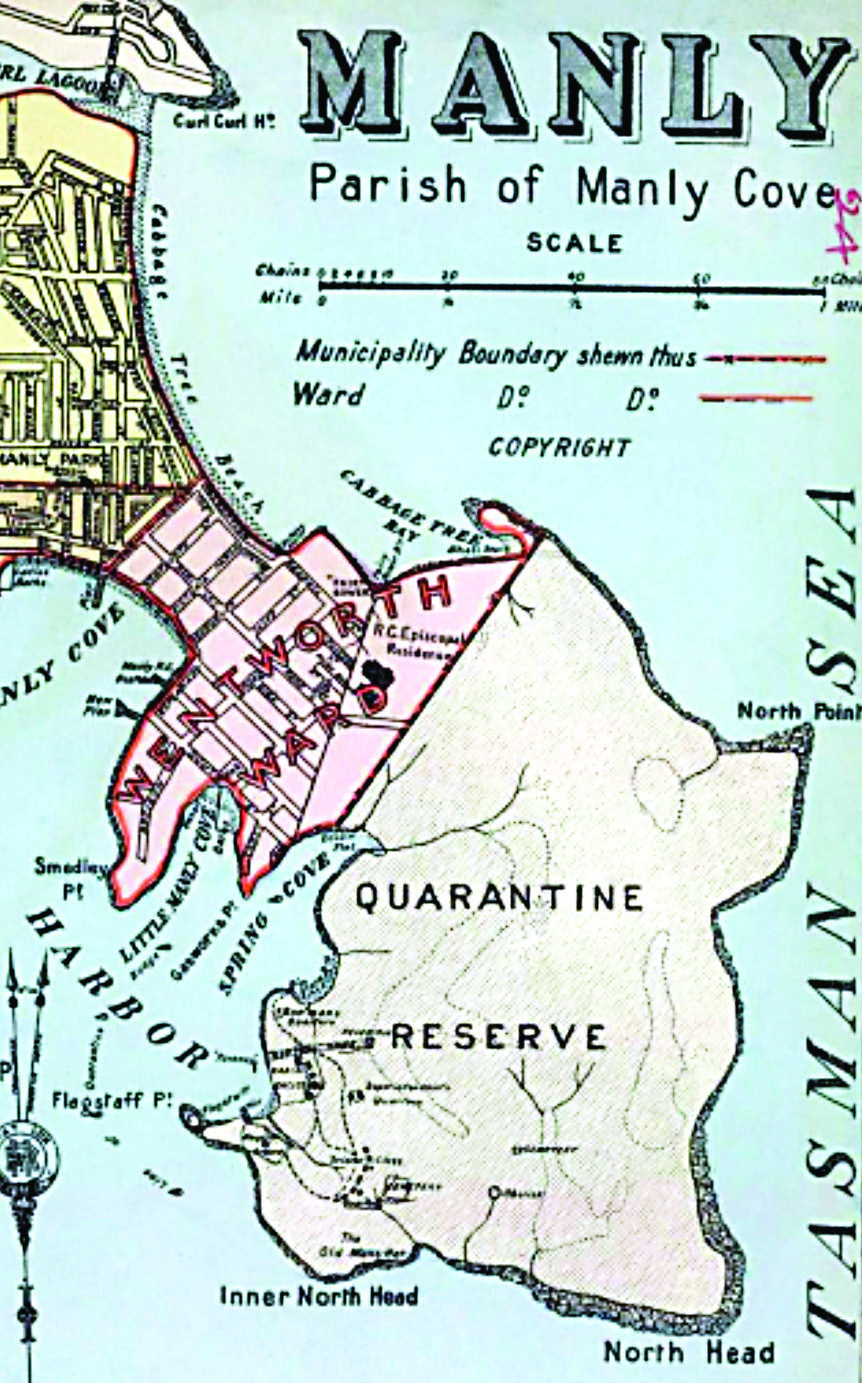
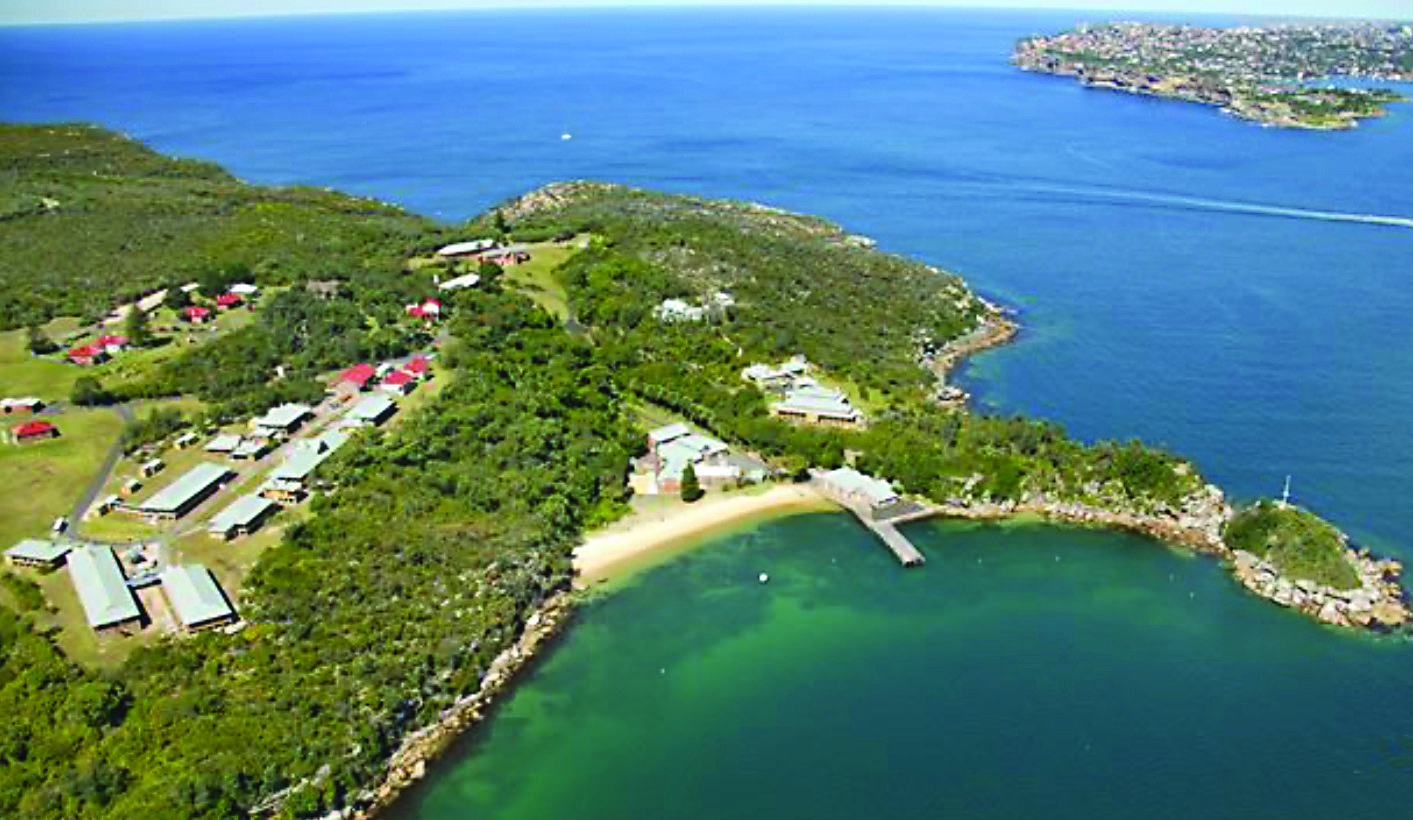
Elizabeth Bowden died in Manly Cove on the North Head of Sydney Harbour after contracting typhus on board the ship ‘Maitland’ in 1838. ‘Maitland’ passengers were accommodated on board or in tents as the Spring Cove quarantine area was already full to capacity with passengers from the ‘William Rogers’. Elizabeth was one of 286 ‘Maitland’ passengers and crew who contracted typhus or scarlet fever; 40, including  Elizabeth’s son Jacob Bowden died on board and others, such as her oldest son James Bowden, succumbed soon after. The report of a committee of enquiry was a damning indictment of the system which allowed immigrants to be ‘transported to the colony like cattle’.